
- Your cart is empty
- Continue Shopping

 By
By What Is a Gimbal and How Does It Work:
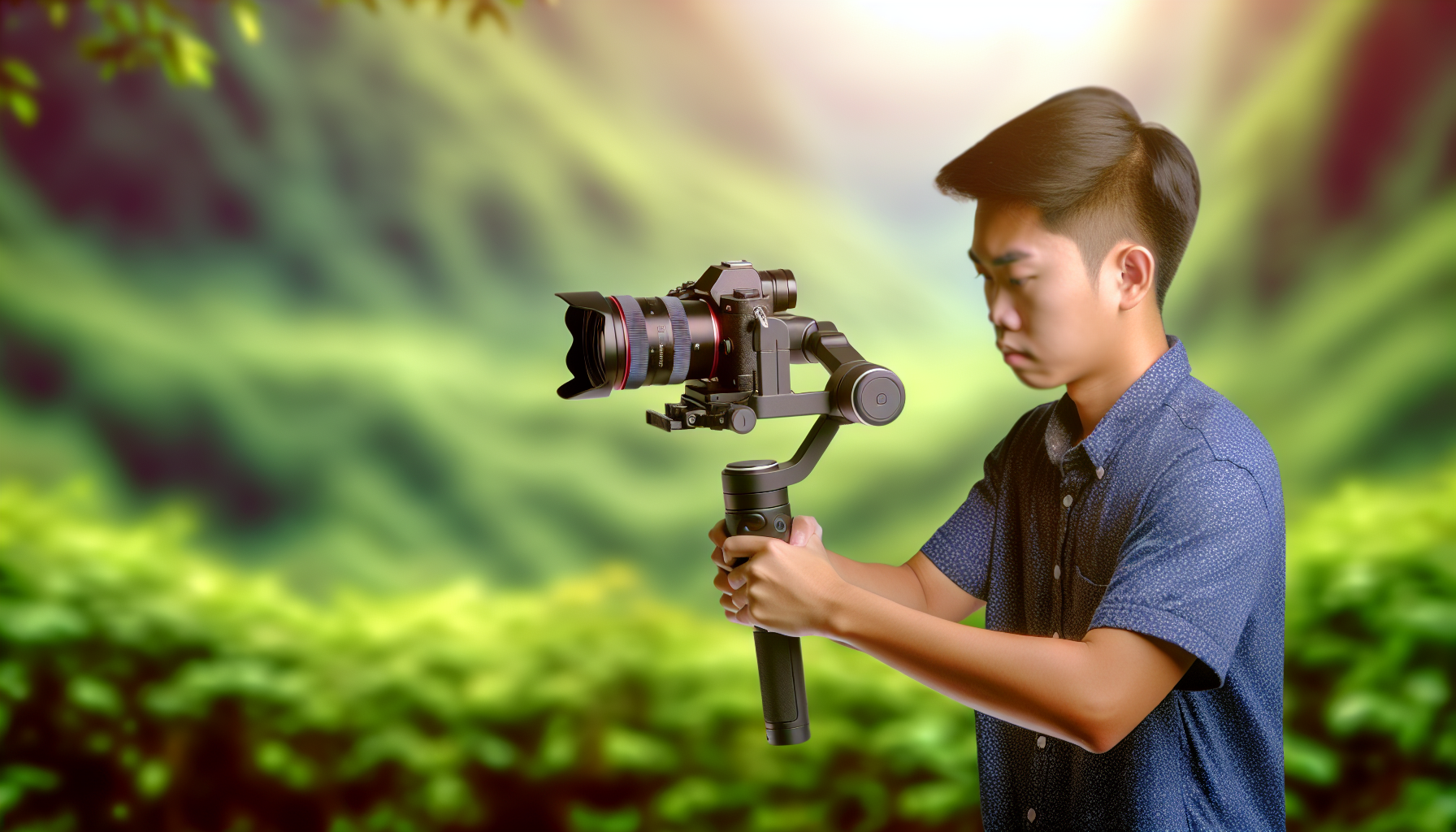
The gimbal is a camera support system celebrated for its ability to deliver smooth, stable footage even when the operator or camera is in motion. At its core, a gimbal works by isolating the camera from the movements of its surroundings, allowing it to remain steady on multiple axes.
A Brief History
The concept of the gimbal dates back centuries. Early gimbals were purely mechanical, designed for maritime navigation to keep compasses and other instruments level on ships rocking on the waves. These early devices used a series of pivoted rings to allow an object within the innermost ring to remain upright regardless of the orientation of the outer rings.
The Core Function: Multi-Axis Stabilization
The primary function of a gimbal is to counteract unwanted movement and maintain stability along multiple axes. This is achieved through a system of motors and sensors working in tandem. Imagine holding a camera while walking; you’ll naturally experience movements in different directions: up and down (tilt), side to side (pan), and rotationally (roll). A gimbal actively compensates for these movements to keep the camera steady.
Mechanical vs. Electronic Gimbals
Early gimbals were entirely mechanical, relying on carefully balanced rings to isolate movement. While mechanical gimbals are still used in some specialized applications, like steadying optical instruments, electronic gimbals have largely taken over the photography and videography world due to their superior precision and capabilities.
Electronic gimbals use motors and electronic sensors to detect and counteract movement. These sensors, typically gyroscopes and accelerometers, measure the gimbal’s orientation and movement. This data is fed into a control system that drives the motors to make minute adjustments, keeping the camera stable.
Axis Stabilization in Detail
Axis stabilization is the key to a gimbal’s performance. A single-axis gimbal can correct movement along just one axis, such as tilt. While useful for specific applications, they don’t provide comprehensive stability. Three-axis gimbals, on the other hand, stabilize along the tilt, pan, and roll axes, offering a greater level of control and smoothness. The motors in a three-axis gimbal are individually responsible for correcting movement along their respective axes which results in exceptionally smooth and professional footage.
Evolution of Modern Gimbals
Modern electronic gimbals are highly sophisticated pieces of technology. They incorporate advanced algorithms to predict and counteract movement, often offering customizable settings to fine-tune performance for different camera setups and shooting scenarios. They are widely used in photography, videography, drone operation, and even navigation.
The evolution of gimbals has significantly impacted filmmaking and content creation. They enable camera operators to capture dynamic shots without the need for cumbersome tripods, dollies or cranes. Whether it’s tracking a subject while running, capturing a smooth aerial shot from a drone, or simply eliminating handheld shake, gimbals have become an essential tool for visual storytellers.
Choosing the Right Gimbal for Your Needs:
Selecting the most suitable gimbal for your needs involves considering several critical factors, ensuring that the device will effectively support your camera system and meet the demands of your specific applications.
Camera Compatibility and Payload Capacity
The very first thing to establish is whether the gimbal can physically and electronically interface with your camera. Check to see if the camera mounting plate or cage is compatible with whatever camera you intend on using, and also check the physical dimensions of the gimbal. More important is the payload capacity of the gimbal: it must be able to handle the weight of your camera and any accessories you plan to use, such as lenses, microphones, or monitors. Exceeding the payload limit can damage the gimbal motors or result in poor stabilization performance. It’s always best to choose a gimbal with some additional payload capacity to accommodate future gear upgrades or accessories.
Number of Axes: Single-Axis vs. Three-Axis
As mentioned previously, the number of axes a gimbal stabilizes determines the type of movements it can correct. Single-axis gimbals are typically used with smartphones, primarily for vloggers who need to stabilize horizontal movements while walking or talking to the camera.
However, for more professional video work, a three-axis gimbal is necessary. A three-axis gimbal will stabilize all the primary axes of movement: pan, tilt, and roll, resulting in incredibly smooth footage. While three-axis gimbals are larger and more expensive than one-axis gimbals, they are an essential investment for filmmakers and content creators aiming for a polished, professional look.
Size and Portability
Consider the size and weight of the gimbal, especially if you plan to travel frequently or shoot in tight spaces. Smaller, lighter gimbals are easier to transport and operate for extended periods. Compact gimbals are ideal for mobile content creation, while larger, more robust gimbals are designed for professional filmmaking with heavier cameras and lenses.
Battery Life
Battery life is crucial, especially for longer shoots or when working in remote locations. Check the gimbal’s battery specifications and consider purchasing extra batteries or a power bank to extend your shooting time. Some gimbals also support hot-swapping batteries, allowing you to replace them without interrupting the shoot.
Control Interfaces and Features
Modern gimbals offer a variety of control interfaces and features that can enhance your shooting experience. Look for gimbals with intuitive controls, such as joysticks, buttons, and smartphone apps, to adjust settings and operate the gimbal remotely.
Some gimbals also offer advanced features like object tracking, time-lapse mode, and panorama mode. Some gimbals have companion apps that allow for remote control, firmware updates, and customized settings. The interfaces supported by gimbals vary widely too, some supporting only the bare minimum in terms of a trigger and joystick, others supporting a plethora of customization. Assess what you need in terms of both physical and software interfaces when choosing a gimbal.
Smartphone Compatibility
If you primarily shoot with a smartphone, choose a gimbal specifically designed for mobile devices. These gimbals are typically smaller, lighter, and offer features like automatic face tracking and zoom control.
Use Cases
* Handheld Filming: For handheld filming, prioritize a lightweight gimbal with a comfortable grip and intuitive controls. Three-axis stabilization is essential for smooth, professional-looking footage.
* Mobile Content Creation: For mobile content creation, choose a compact and portable gimbal that is easy to set up and use. Look for features like face tracking, gesture control, and live streaming compatibility.
* Professional Filmmaking: For professional filmmaking, invest in a robust gimbal with a high payload capacity and advanced features like customizable settings, remote control, and compatibility with a range of cameras and lenses.
